Architectural Facade Composites GRC Factory
Leading GRC • GRP • GRG • UHPC Contractors Serving KSA, Kingdom of Saudi Arabia Since 2002
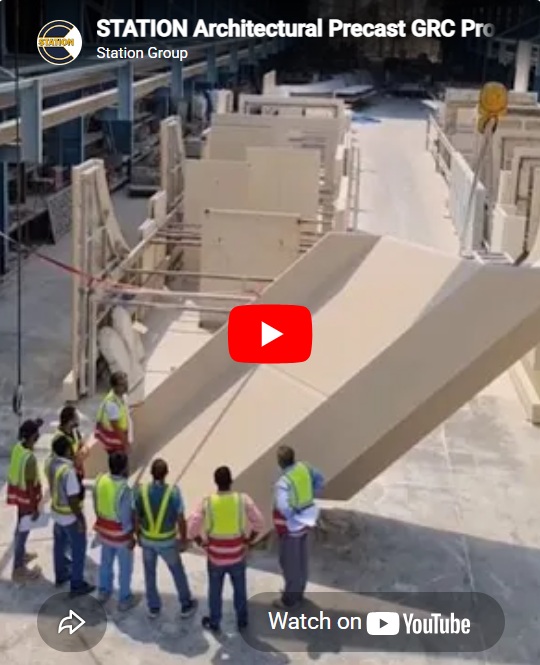
STATION is a leading provider of Architectural Precast Façade Systems in Saudi Arabia, serving Riyadh, Jeddah, Dammam, NEOM, Red Sea Islands, and major cities across the Kingdom. We specialize in the design, manufacturing, and installation of high-quality GFRC cladding systems for commercial, mixed-use, and large-scale developments.
Our exterior façade products are available in a wide range of architectural styles, textures, finishes, and color shades, helping architects and developers achieve distinctive, modern building designs. Each solution is engineered to deliver durability, visual impact, and long-term performance in Saudi Arabia’s demanding climate.
All STATION operations strictly comply with international construction and manufacturing standards, ensuring consistency, safety, and superior quality. Our commitment to excellence has made us a trusted composite and façade partner for landmark projects throughout the Kingdom.
We manufacture advanced composite exterior systems using UHPC, precast concrete, GRC, and fiberglass-based materials, designed to withstand extreme heat, sand, humidity, and harsh weather conditions. These materials provide exceptional strength and reliability for year-round outdoor applications across Saudi Arabia.
By working closely with local developers, architects, and contractors, STATION delivers cost-effective, customized composite façade solutions that seamlessly integrate quality, performance, and architectural aesthetics, ensuring successful project delivery and client satisfaction.
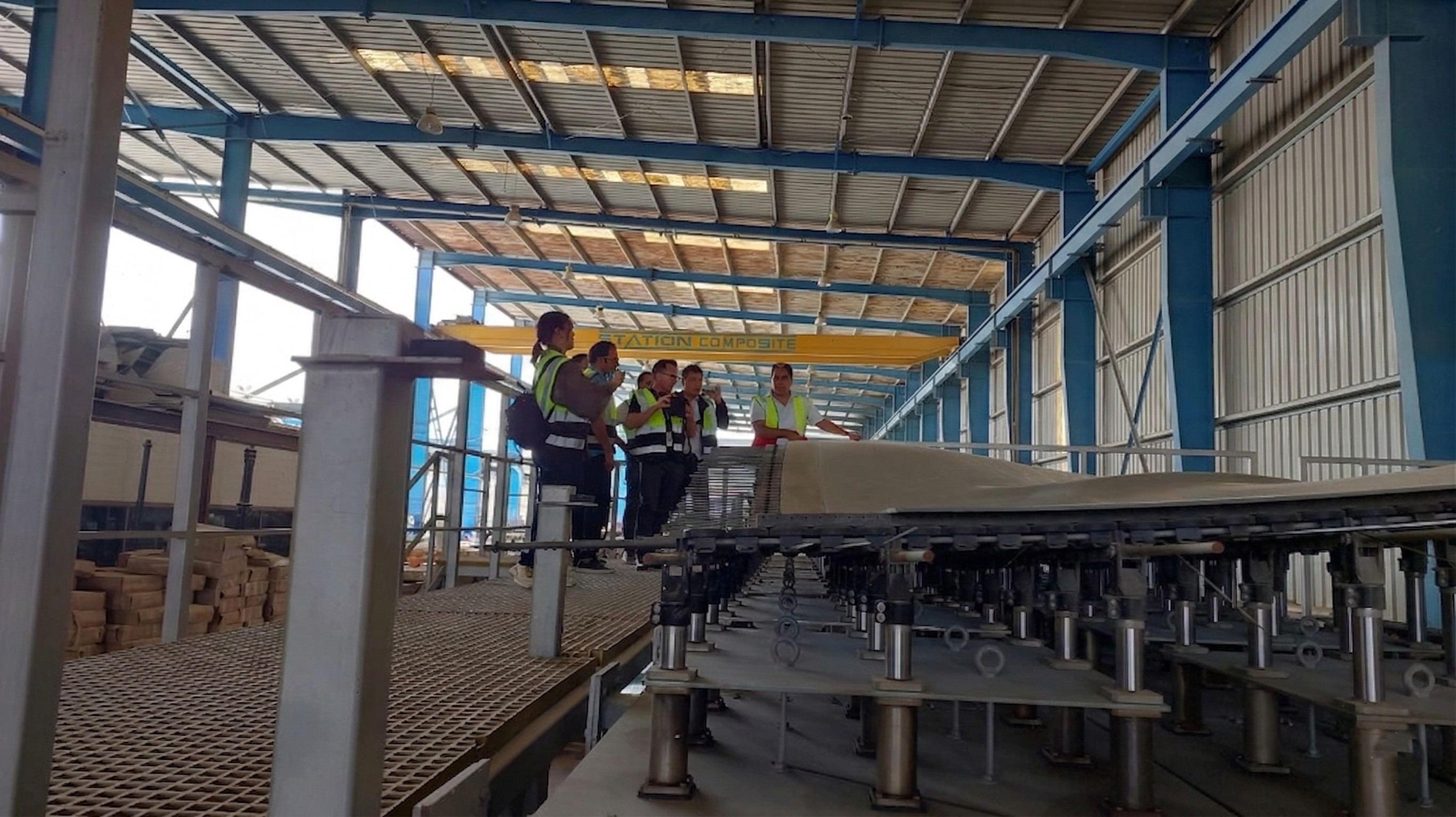
Station Industrial Facility
Composite Materials We Use
We specialize in the development and application of advanced composite materials that are purpose designed for architectural, structural, and decorative projects of varying scale and complexity. These materials are engineered to deliver superior performance across multiple dimensions—strength, weight optimization, durability, and design flexibility—ensuring that each solution not only meets but exceeds modern construction and aesthetic standards. By integrating innovation with sustainability, our composites provide architects, engineers, and designers with the freedom to realize bold concepts while maintaining long term resilience and environmental responsibility. Whether applied in façades, interiors, infrastructure, or bespoke artistic features, our portfolio of composites is distinguished by its ability to combine technical excellence with creative versatility, offering clients a reliable foundation for projects that demand both functional integrity and architectural distinction.
Our division specializes in a diverse range of composite materials, each tailored to meet specific project requirements and environmental conditions:
- Integrated Concrete Composite Material
- Glass Fiber Reinforced Concrete (GRC)
- Glass Fiber Reinforced Polymer (GRP/FRP)
- Glass Fiber Reinforced Gypsum (GRG)
- Ultra High-Performance Concrete (UHPC)
- Digital Art Works & CNC-based Architectural Solutions
- Durability: Resistant to severe weather conditions, corrosion, and environmental stress.
- Design Flexibility: Freedom to create complex geometries, textures, and finishes.
- Cost-Effectiveness: Optimized production methods reduce material usage and installation time.
- Client-Centric Approach: Close collaboration with clients ensures satisfaction and tailored solutions.
- Sustainability: Long-lasting materials with reduced environmental impact.
At STATION, we thrive on incorporating quality and aesthetics into construction requirements. Our architectural precast composites are not only functional but also enhance the visual identity of projects. By leveraging advanced composites such as GRC, GRP, GRG, UHPC, and digital art technologies, we provide solutions that are innovative, reliable, and future-ready.
(GRC, GRP, GRG, UHPC, Steel, Wood, Natural Stone & Light Metal, Hardscape, Concrete Furniture)
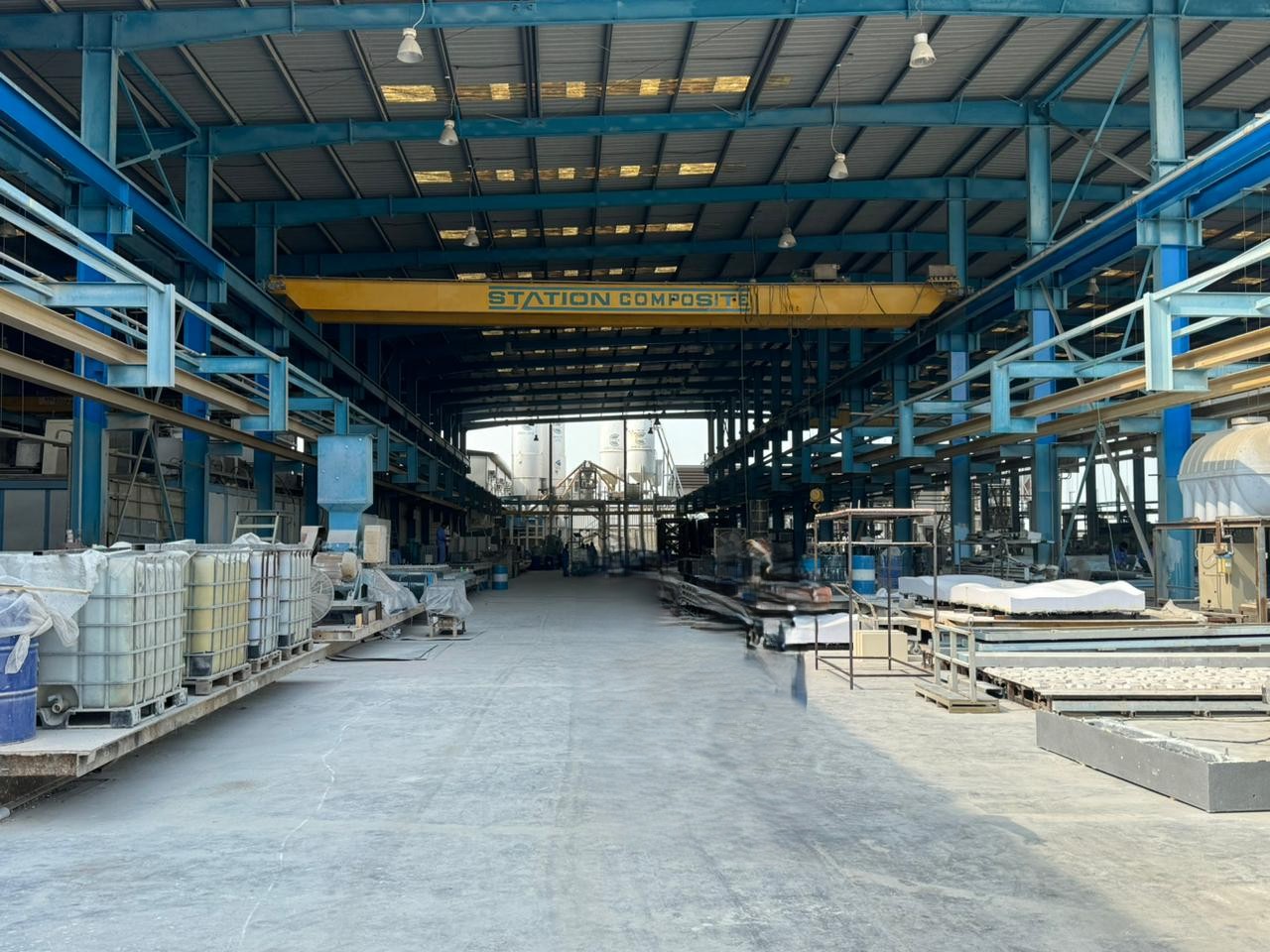
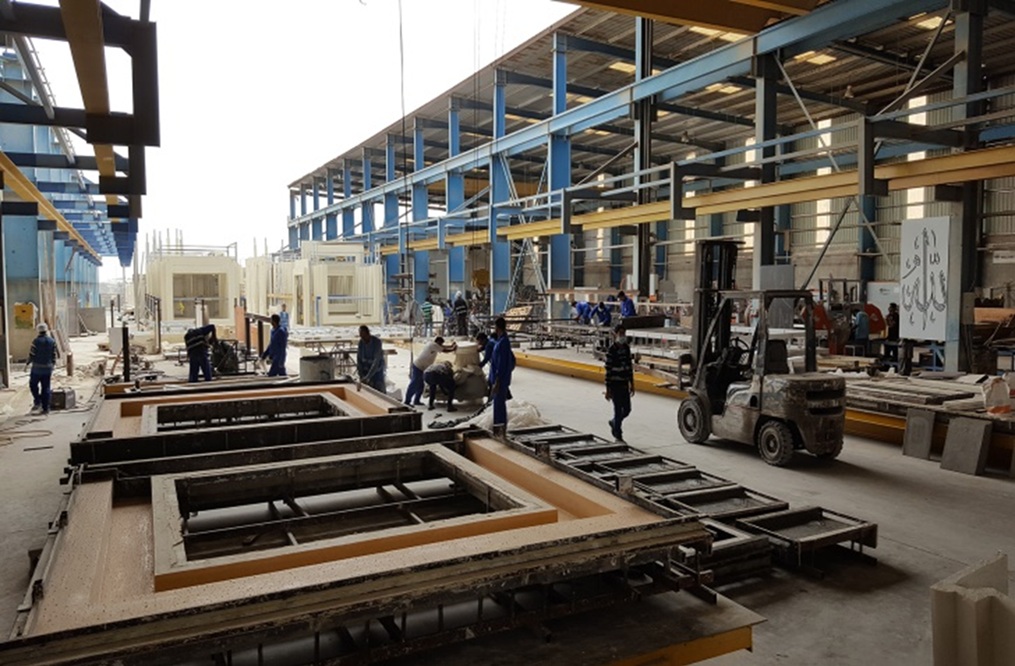
Our state-of-the-art factory is equipped with advanced machinery and technology to produce high-quality architectural precast composites, hardscape products, and concrete furniture. With a focus on innovation and sustainability, our factory enables us to meet the diverse needs of our clients while maintaining strict quality control standards. From design to production, we ensure that every product meets our commitment to excellence and durability. Our manufacturing division currently has over 400 manpower plus 100 installers operating on different shifts, ensuring round-the-clock productivity to meet aggressive project timelines. STATION is supported by our own PI insurance, ensuring all our designs comply with international industry standards.
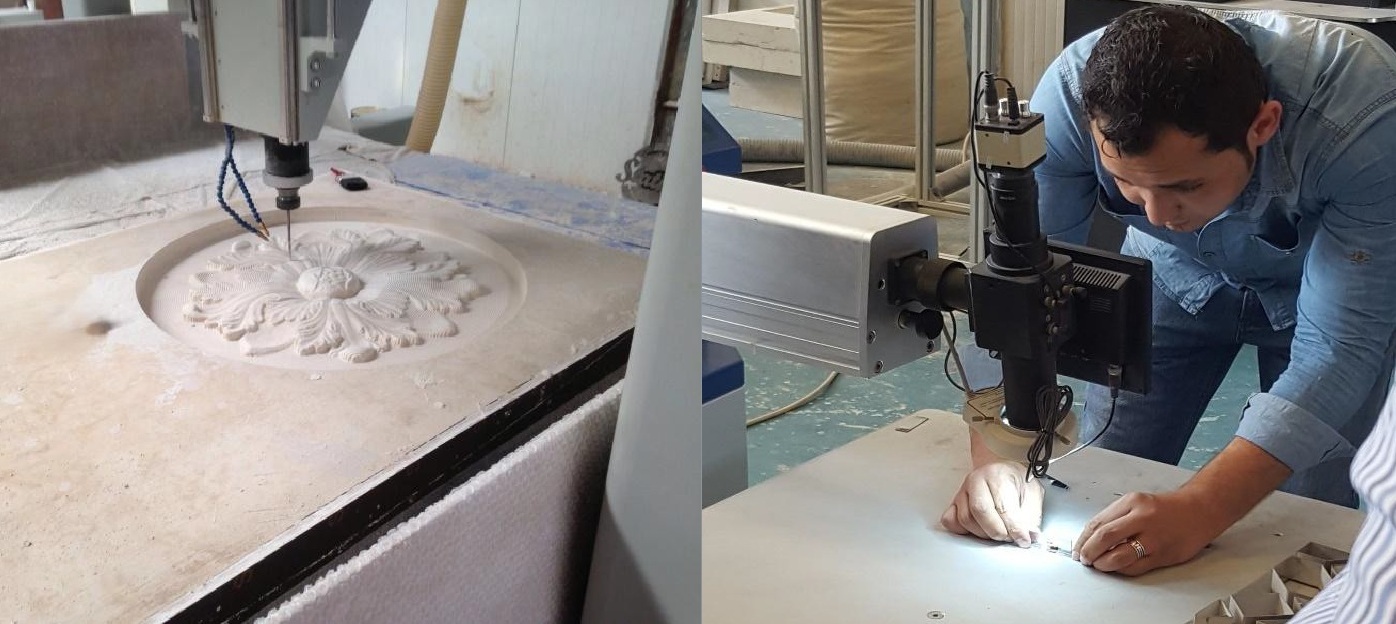
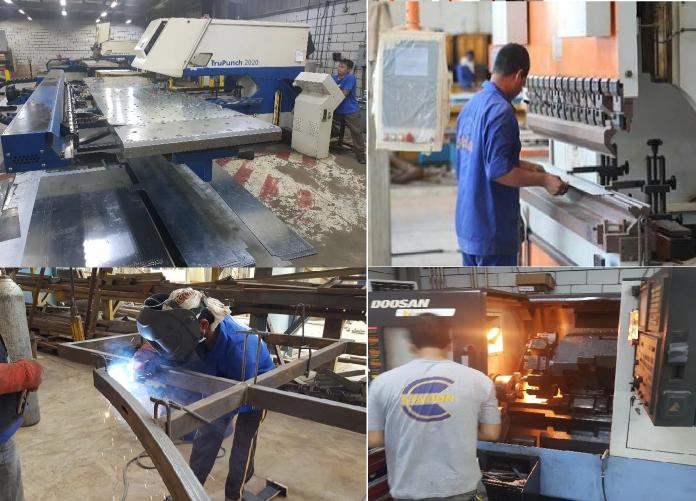
There are more than 20 CNC machines in various sizes and functionalities within our facility. These machines perform various engineering processes to transform raw materials into complex architectural components. Our capabilities include subtractive manufacturing (high-precision milling and lathing), laser and waterjet cutting, and advanced material shaping for metal and composite profiles. We process a wide range of materials, including concrete, polymer composites, metal, wood, polystyrene, and natural stone.
Advanced Robotics – Digital Engineering – Sustainable Production – Global Standards
The company's engineers and skilled technicians possess expert knowledge in CAD/CAM programming strategies to achieve digital engineering production. All of our designs and specifications are written by our CSSW qualified technical team, supported by our in-house Structural & Survey Engineers. This internal synergy facilitates shortening the cycle of any approvals or queries coming directly from the site. By integrating design and manufacturing under one roof, we eliminate bottlenecks and ensure that what is designed is precisely what is built.
.jpg)
.jpg)
.jpg)
.jpg)
.jpg)
.jpg)
.jpg)
.jpg)
.jpg)
.jpg)
.jpg)
.jpg)
.jpg)
.jpg)
.jpg)
.jpg)
.jpg)
.jpg)
.jpg)
.jpg)
STATION operates under strict adherence to global engineering benchmarks. We ensure that all precast and composite products are tested and verified to meet industry standards, including PCI (Precast/Prestressed Concrete Institute) for structural integrity, GRCA (Glass Fibre Reinforced Concrete Association) for GRC excellence, and ASTM International for rigorous material testing.
- Subtractive Manufacturing: High-precision milling, lathing, and punching.
- Cutting Technologies: Laser, Waterjet, Hot Wire, and Fast Wire systems.
- Material Shaping: Bending, rolling, and multi-material profile processing.
- Specialized Composites: Architectural GRC, GRP, GRG, and UHPC manufacturing.
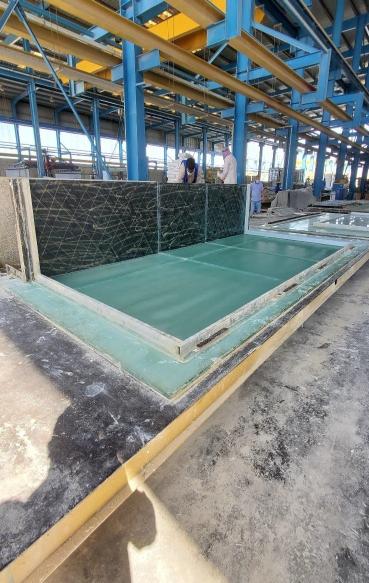
- Fully automated GRC batch plant with colour mixing technology.
- Fully automated remote controlled distribution mortar.
- Top of the line machinery and raw material for mold & GRC fabrication.
- 10 types of sand and aggregates able to produce either dry mix or wet mix.
- Tilting tables & Magnetic shuttering system.
- Remote control casting and distribution.
- Boiling system for curing and controlled quality.
- Vacuum Infusion technology for GRP elements.
- R.T.M technology & P.U Injection for double face G.R.P element.
- C.N.C cutting marble boards & N.C mixing marble component.
- C.N.C plasma machine (up to 12 meters).
- C.N.C press brake (up to 6 meters).
- C.N.C shear, band saw, iron worker machines.
- N.C wrought iron bending machine & Automatic welding.
- TIG, MIG, Stick welding machine.
- Galvanizing facility & Electroplating (copper, nickel and chrome).
- C.N.C milling & C.N.C cutting.
- Painting and Polishing.
- 3D model scanning technology (up to 50 micron).
- Topcon Building Surveying System.
- 3D Printing technology.
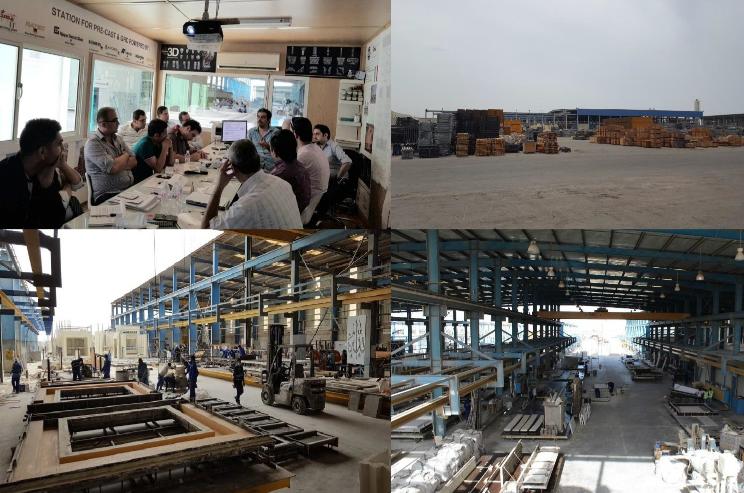
Project Execution Methodology
A systematic, end-to-end framework engineered to ensure technical precision, manufacturing quality, and flawless architectural delivery.
Tendering & Estimation
- Project Estimation (On-Hand or Tender)
- Comprehensive Site Visit & Assessment
- Commercial & Technical Quotation Submission
- Mockup Submission (To demonstrate competitive edge)
- Official Project Award
Design & Calculations
- Mockup Approval & Advance Payment Activation
- As-Built Surveying from Site Locations
- Mix Design & Fabrication Method Approvals
- Rigorous Structural Analysis & Calculations
- Installation & Repair Method Statement Approvals
Detail Shop Drawings
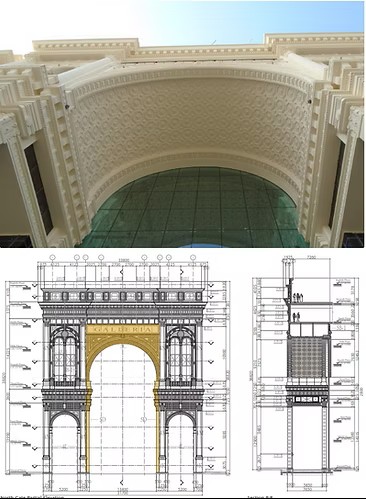
- Detailed Shop Drawings Technical Preparation
- Final Shop Drawings Approvals (By Client & Engineer)
- Detailed Production Shopdrawings split by Element
Mold & Frame Fabrication
- Steel Stud Frame / Structural Bracket Fabrication
- Advanced 3D Modeling (For precision CNC Molds if required)
- Master Pattern Architecture Design
- Mold Engineering (Utilizing Machining & Skilled Manpower)
Casting & Logistics
- Composite Material Casting & Controlled Demoulding
- Professional Patching, Repairing & Surface Finishing
- Secure Loading, Protective Packing & Freight Shipping
- Safe Transit Delivery to Site Locations
- Regulated Unloading at Site Logistics Storage
Installation & Handover
- Material Inspection Report (MIR) from First Party (Progress Invoice % on MIR verification)
- Erection Managed by Skilled Building Surveyors (Progress Invoice % on Structural Erection)
- Handover Inspection Report Finishing (HIR Validation)
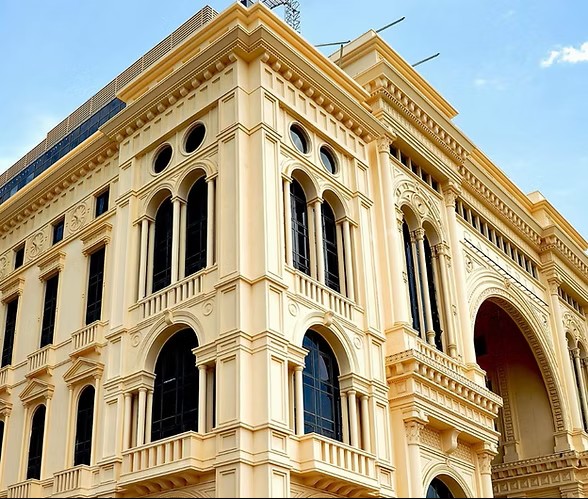
Glass Fiber Reinforced Concrete (GRC) is a high-performance composite material made from Portland cement, fine aggregates, water, alkali-resistant glass fibers, and specialized additives. When manufactured under controlled conditions using precise mix proportions, GRC delivers exceptional strength while remaining significantly lighter than traditional concrete.
By utilizing high-strength glass fibers instead of steel reinforcement, STATION engineered solutions allow for thinner, more intricate sections. This results in architectural elements that combine durability with a refined aesthetic finish, ideal for modern Saudi Arabian developments.
- Portland cement and fine sand
- Approximately 5% glass fiber by weight
- Water-to-cement ratio of about 0.33
- 5% acrylic co-polymer additive by volume
This specific combination, when processed at STATION facilities, results in outstanding flexural, tensile, and impact strength, provided the material is properly mixed, sprayed, compacted, and curing.
- Proven Expertise: Decades of technical experience and 500+ successful projects.
- Innovative Detailing: Unique methods of design, manufacturing, and installation.
- Client Confidence: Trusted for solving complex design and construction challenges.
- Superior Quality: Compliance with international standards ensures long-lasting performance.
- Wall panels and façades
- Window surrounds and column covers
- Cornices, brackets, quoins, and copings
- Domes, soffits, pilasters, and railings
- Site furnishings, planters, bollards, urns, and tables
- Strength: Glass fibers provide tensile strength higher than steel; a 5% fiber mix achieves compressive strength of 6,000–8,000 psi.
- Durability: Resistant to salt spray, moisture, and freeze-thaw cycles. Performs better than conventional concrete.
- Longevity: Testing confirms GRC’s lifespan equals or exceeds precast concrete.
- Lightweight: 70–90% lighter than solid concrete, reducing structural load.
- High Strength: Delivers excellent flexural and tensile performance for architectural durability.
- Durable: Highly resistant to weathering, corrosion, and extreme temperatures.
- Disaster Resistant: Proven resilience against hurricanes, floods, fires, and earthquakes.
- Eco-Friendly: Reduced material usage and lower transportation impact.
- Aesthetic Flexibility: Unlimited shapes and textures; available in integral colors or paint-grade finishes.
- Fire Resistant: Mineral-based composition that will not burn or contribute to flame spread.
- Design Freedom: Advanced casting capabilities allow the material to be formed into virtually any architectural shape.
Colors: Standard limestone shades plus custom-matched options.
Textures: Smooth, sandblasted, honed, exposed aggregate, travertine, wood grain.
Shapes: Flats, curves, domes, spheres, waves, and intricate forms.


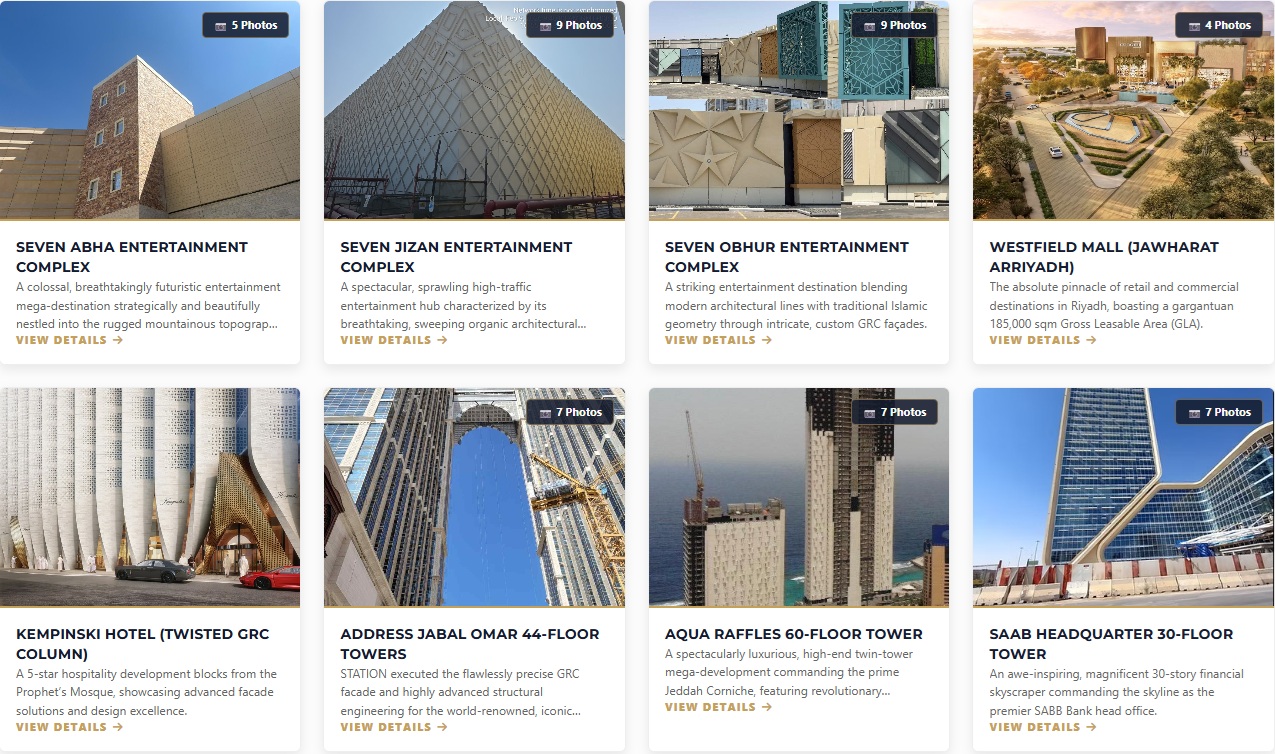
GRP represents the pinnacle of modern composite engineering, bridging the gap between structural integrity and design freedom. By combining high-strength glass fibers with specialized polymer resins, we create materials that outperform traditional alternatives in both harsh industrial environments and delicate architectural projects.
Our commitment to GRP excellence focuses on longevity, sustainability, and rapid site deployment. Whether for infrastructure durability or complex architectural geometry, our composite solutions are engineered to meet the highest international standards of performance and safety.
Glass Reinforced Plastic (GRP), also known as Fiberglass or FRP (Fiber Reinforced Plastic), is one of the world’s most versatile composite materials. Its architectural potential was famously revealed in 1967 during the attempted demolition of Disneyland’s House of the Future, which proved nearly indestructible. Since then, GRP has become widely adopted across construction, transportation, marine, and aerospace industries.
We utilize advanced manufacturing techniques, including but not limited to:
- Filament Winding: Capable of producing elements up to 5m in diameter.
- Pultrusion: Utilizing servo-based operations for the production of precision profiles.
- SMC (Sheet Moulding Compound): High-capacity 800 TON + 200 TON presses, supported by in-house raw material production.
- Versatile Molding: Advanced Spray Chopper (open mould) and RTM (close mould) processes.
These capabilities allow us to produce a wide range of durable GRP products for industrial, architectural, and infrastructure applications, while maintaining cost efficiency and exceptional customer satisfaction. Our specialized techniques ensure consistent quality and performance. In particular, our advanced GRP manufacturing line enables the production of large-scale tanks, silos, and other industrial storage solutions, offering clients durable, hygienic, and cost-effective alternatives to traditional materials.
- Extremely Strong: Up to seven times the flexural strength of steel.
- Lightweight: High strength-to-weight ratio reduces structural and shipping costs.
- Seamless Construction: Sections can be bonded to form watertight assemblies.
- Highly Moldable: Ideal for complex shapes, textures, and intricate details.
- Low Maintenance: Will not rust, corrode, or require cathodic protection.
- Disaster Resistant: Performs exceptionally well in extreme weather conditions.
- Superior Aesthetics: Can replicate bronze, wood, stone, iron, and more.
GRP is widely used for:
- Architectural domes, Canopies, vaults, minarets, and decorative cladding.
- Parking structures, industrial covers, and façades.
- Boat hulls, marine structures, automotive components, aircraft parts, and storage tanks.
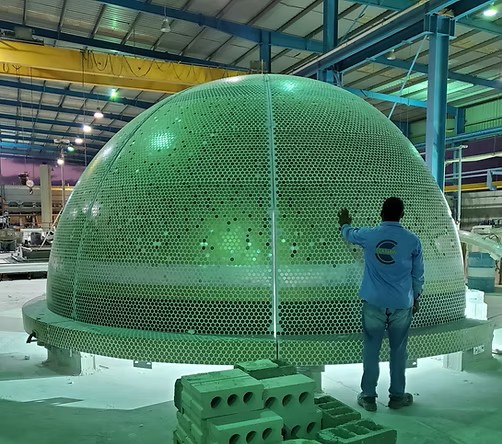
Custom GRP Dome Fabrication
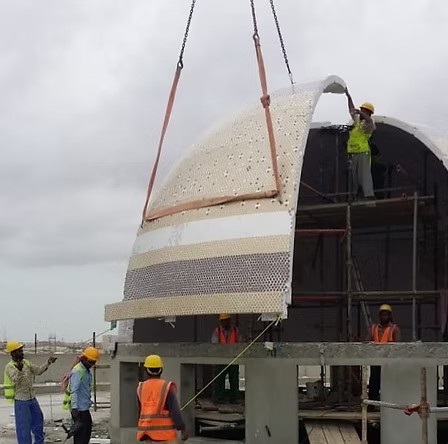
Architectural Fiberglass Dome Installation
Glass Fiber Reinforced Gypsum (GRG) is a lightweight, high-strength interior building material that serves as a modern alternative to traditional plasterwork. It is composed of ultra-fine alpha gypsum, Portland cement, sand, and glass fiber reinforcement. GRG is pre-molded, cost-effective, and capable of producing highly detailed architectural elements with consistent quality. Note: GRG is intended for interior use only and is not suitable for exterior environments.
Why Choose GRG? It is flame resistant, lightweight, easy to install, and offers immense design flexibility for interior decor.
- Lightweight & Strong: Requires little to no additional structural support
- Cost-Effective: Lower cost than traditional plaster or carved materials
- Fire Resistant: 100% non-combustible and flame resistant
- Smooth Finish: Ideal base for paint and decorative coatings
- Crack & Shrink Resistant: Long-lasting and dimensionally stable
- Fast Installation: Prefabricated components reduce on-site labor
- GRG is commonly used for:
- Domes and ceilings
- Columns and cornices
- Moldings and decorative interior features
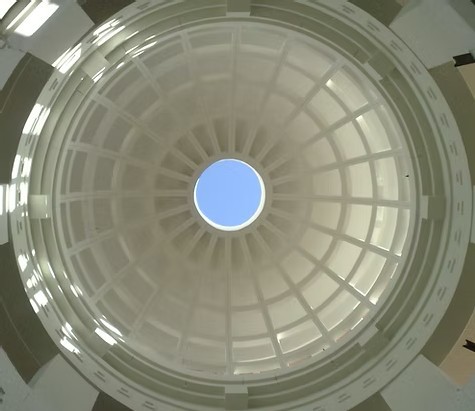
GRG Dome Ceiling
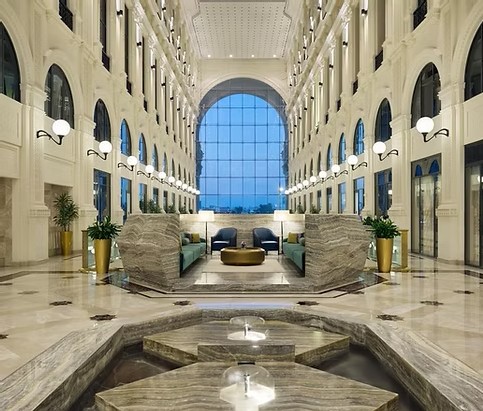
Architectural GRG Interiors
Ultra-High Performance Concrete (UHPC), also known as Reactive Powder Concrete (RPC), represents the latest advancement in concrete technology. It is an advanced composite material designed to overcome the limitations of conventional concrete.
Typical UHPC compositions include:
- Portland cement
- Fine sand and silica fume
- High-range water-reducing admixtures (HRWR)
- Fibers (usually steel)
- Minimal water content
UHPC often eliminates the need for traditional steel reinforcement and can be virtually self-placing.
UHPC provides superior structural performance and architectural flexibility, allowing for designs that were previously impossible with standard concrete.
| Ultra-High Strength |
|
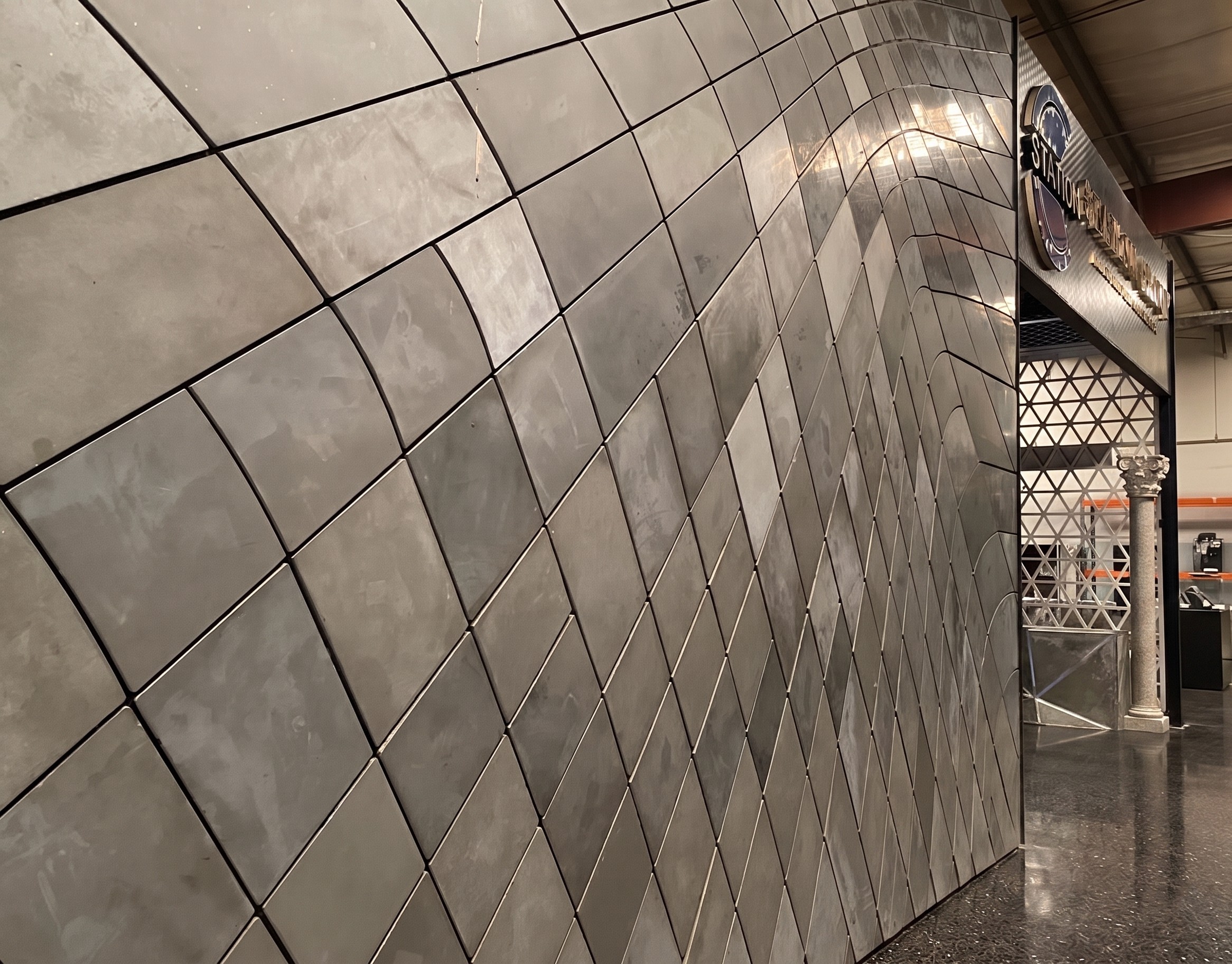
UHPC Triangles Facade at STATION Factory
- Thinner, Lighter Sections: Reduced dead load and material use
- Exceptional Surface Quality: Nearly impermeable and highly refined finishes
- High Ductility & Volume Stability
- Lower Lifecycle Costs: Reduced mold, labor, maintenance, and schedule costs
- Precision Molding: Replicates forms with extreme accuracy
Its superior durability makes UHPC ideal for harsh environments and innovative architectural solutions. UHPC is widely used in:
- Bridges, Beams & Decks
- Solid & Perforated Wall Panels
- Urban Furniture
- Stairs & Floor Tiles
- Marine Structures
- Architectural Louvers
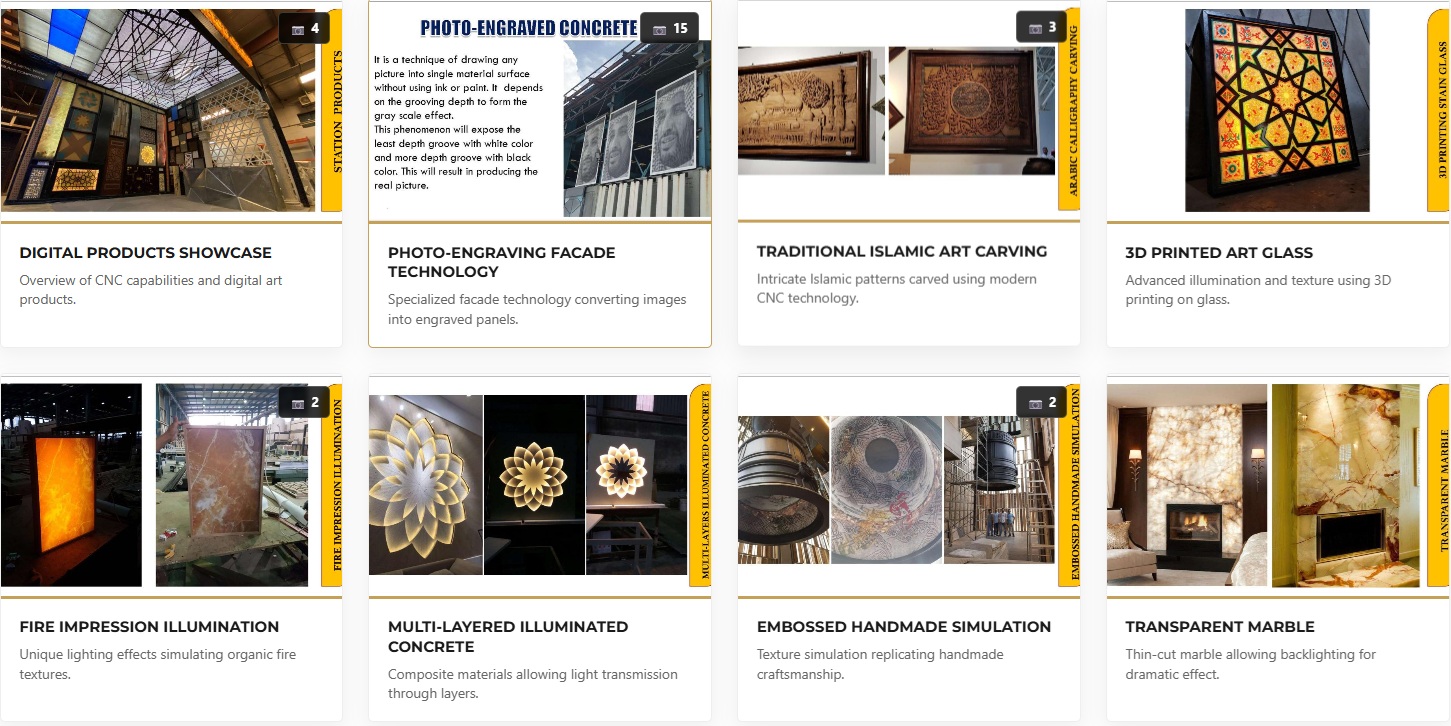
Digital Art in precast composites integrates advanced digital technology into the creative process. We specialize in:
- Photo Engraved Concrete
- Calligraphy Carving
- 3D Printed Stained Glass
- Fire Impression Illumination
- Parametric GRC & Multicolor Pigment GRC
- Embossed Handmade Simulation
- Transparent Marble & Translucent Concrete
- Mosaic Integration & Heritage Impression
- Parametric GRC: Complex geometries and parametric designs.
Advantage: By merging artistic creativity with advanced technology, STATION delivers digital art solutions that transform architectural precast composites into functional works of art.